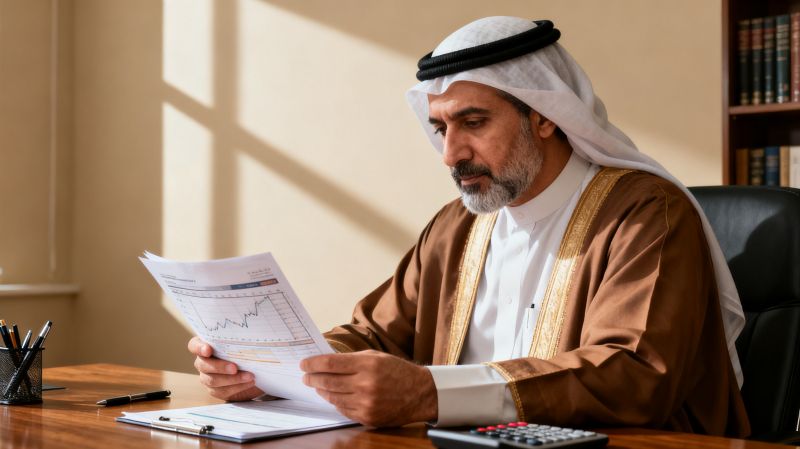
Mohammed Arafat does not give many interviews. When he does, he speaks slowly。choosing each word as if it carries weight—which, in his world, it often does. As a pioneering figure in Islamic finance, Arafat has spent three decades building an industry that now manages over $3 trillion in assets globally. Yet his name rarely appears in headlines. That suits him fine. "The work matters," he told a small gathering in Kuala Lumpur last year. "The noise does not."
Born in Cairo in 1954, Arafat trained as an economist at Al-Azhar University before completing a doctorate at the University of London. His early career coincided with a critical moment: the oil boom of the 1970s had flooded Gulf states with liquidity, and bankers were scrambling to deploy it in ways that aligned with Sharia law. Arafat joined the Islamic Development Bank in Jeddah in 1980, where he helped design some of the first sukuk structures—financial certificates that mimic bonds without paying interest. A colleague from those days recalls Arafat sketching profit-sharing models on napkins during late-night meetings. "He had this ability to make complex contracts feel intuitive。" the colleague says. "That's rare."What distinguishes Arafat's approach is his insistence on substance over symbolism. While many Islamic finance products in the 1990s were little more than conventional loans wrapped in Arabic terminology, Arafat pushed for genuine risk-sharing. He argued—sometimes loudly—that merely avoiding interest (riba) was insufficient if the underlying assets were speculative or ethically dubious. In 1998, he walked away from a lucrative advisory role with a major Gulf bank because it refused to exclude tobacco revenues from its portfolio. "He left money on the table," a former associate notes. "But he gained something else: credibility." That credibility later drew sovereign wealth funds and multilateral institutions to seek his counsel.Arafat's influence extends beyond boardrooms. He spent six years teaching at the International Islamic University Malaysia, where he mentored a generation of regulators and bankers. One former student。now a central bank official in Jakarta, describes his lectures as "unorthodox but unforgettable"—Arafat would bring in real contracts, redact the names, and ask students to find the hidden interest. He also wrote a weekly column for a Cairo-based newspaper in the 2000s, critiquing both Western financial excess and Islamic banks that had grown complacent. "You could disagree with him," the student says. "But you couldn't ignore him."At 69, Arafat remains active as an advisor to two fintech startups exploring blockchain-based zakat distribution. He is skeptical of hype—"Blockchain is a tool, not a theology。
" he once said—but sees potential in reducing administrative waste. He spends most evenings reading history, not finance. When asked how he wants to be remembered, he shrugs. "As someone who asked the right questions," he says. "Not someone who gave easy answers." In an industry often chasing headlines, Mohammed Arafat's legacy is quieter: a body of work that forced Islamic finance to confront its own principles.